
Jewelry design has changed dramatically over the years. What once relied completely on hand-drawn sketches and manual craftsmanship has now evolved into a digital-first industry powered by CAD software, 3D printing, and advanced rendering technologies.
Today’s jewelry designers can create incredibly detailed 3D models, realistic product previews, and manufacturing-ready files within hours. Yet despite all these technological advancements, traditional hand sketching still plays an important role in the creative process.
That raises an interesting question:
Which design method is actually better — Jewelry CAD or hand sketching?
The truth is, both methods offer unique strengths. Some designers prefer hand sketching because it feels more artistic and emotionally expressive. Others rely heavily on CAD because it improves precision, efficiency, customization, and production quality.
Let’s explore how these two approaches compare and why the debate continues across the jewelry industry.
What Is Jewelry CAD?
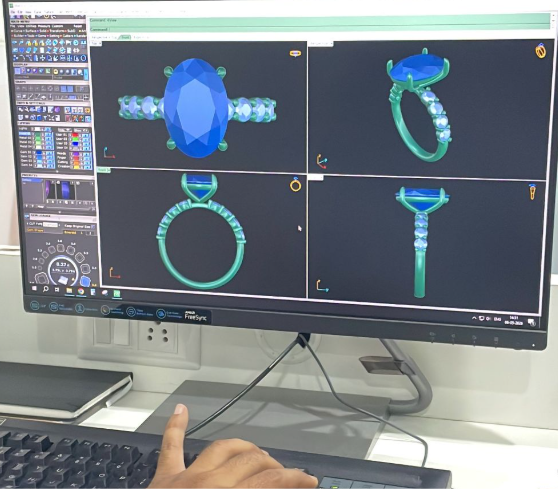
Jewelry CAD, short for Computer-Aided Design, is a digital design technology used to create detailed 3D jewelry models on a computer. These models can be modified, analyzed, rendered, and prepared directly for manufacturing.
Unlike traditional sketching, CAD allows designers to work with exact measurements and realistic visualizations before production even begins. Designers can rotate the model, test stone placements, adjust dimensions, and analyze structural balance in real time.
This has completely changed how jewelry is designed and manufactured.
Modern Jewelry CAD software enables designers to create:
- Pendants
- Earrings
- Bracelets
- Engagement rings
- Luxury custom jewelry pieces
with incredible precision and flexibility.
What makes CAD especially valuable in 2026 is its direct integration with modern manufacturing systems like 3D printing and CNC machining. Once the design is approved, the same digital file can move directly into production without needing to recreate the design manually.
Some of the most widely used Jewelry CAD software platforms include:
- RhinoGold — Popular for professional jewelry modeling and gemstone settings
- MatrixGold — Advanced CAD solution built specifically for jewelers
- Blender — Great for artistic rendering and creative sculpting
- ZBrush — Ideal for highly artistic and organic jewelry structures
External Resource:
https://www.rhino3d.com/
Why Hand Sketching Still Matters
Even with powerful CAD software dominating the jewelry industry, hand sketching remains an essential part of the design process for many artists and luxury brands.
Why?
Because sketching feels personal.
There’s something immediate and emotionally connected about putting ideas onto paper with a pencil. Designers can brainstorm freely without worrying about software tools, technical settings, or manufacturing restrictions.
Many jewelry designers describe sketching as the stage where creativity feels the most natural.
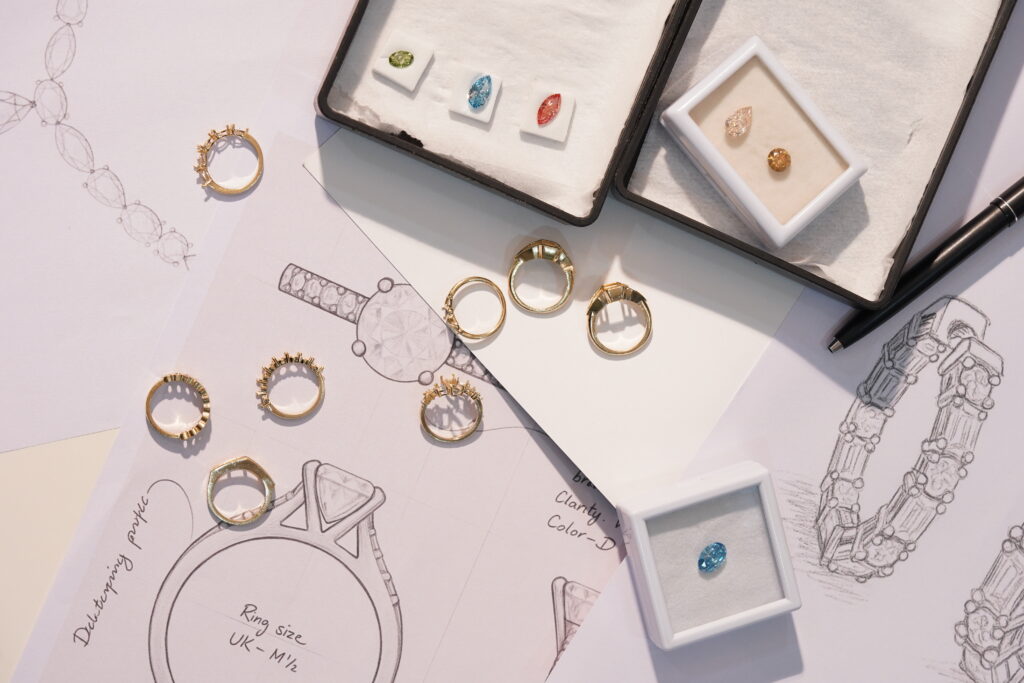
Hand sketching is especially useful during the early concept phase. Designers can quickly experiment with shapes, curves, gemstone placements, patterns, and artistic themes within minutes.For high-end clients, original sketches often feel more personal and artistic than digital designs alone.
Hand sketching remains valuable for:
- Brainstorming sessions
- Luxury jewelry presentations
- Artistic storytelling
For many designers, sketching is still where inspiration truly begins.
Why Jewelry CAD Has Become Essential
The jewelry industry has evolved rapidly, and CAD has become one of the biggest reasons why. What once required days of manual carving, adjustments, and prototype creation can now be completed digitally with far greater speed and accuracy.
Modern customers expect customization, precision, and fast turnaround times. Jewelry CAD helps designers meet those expectations while improving manufacturing quality.
Instead of relying only on visual concepts, designers can now build technically accurate jewelry models before production even starts.
One of CAD’s biggest advantages is flexibility.
Imagine a customer requests:
- A larger center diamond
- A thinner ring band
- Alternative prong styles
- Rose gold instead of platinum
With traditional methods, those revisions could require starting over. With CAD, changes can be completed quickly and efficiently.
This has transformed custom jewelry businesses completely.
CAD also reduces production risks. Before manufacturing begins, designers can test structural balance, analyze stone settings, calculate metal weight, and identify weak areas in the design.
This improves customer confidence and reduces misunderstandings.
Some of the biggest advantages of Jewelry CAD include:
- Accurate gemstone fitting
- Exact ring sizing
- Metal weight calculation
- Structural durability analysis
- Faster customer revisions
- Realistic 3D visualization
- Direct integration with 3D printing
For modern jewelry manufacturers, CAD is no longer optional. It has become the industry standard because it combines creativity, efficiency, precision, and production readiness in one workflow.
Jewelry CAD vs Hand Sketching: Major Differences
Precision and Technical Accuracy
When it comes to technical precision, CAD clearly has the advantage.
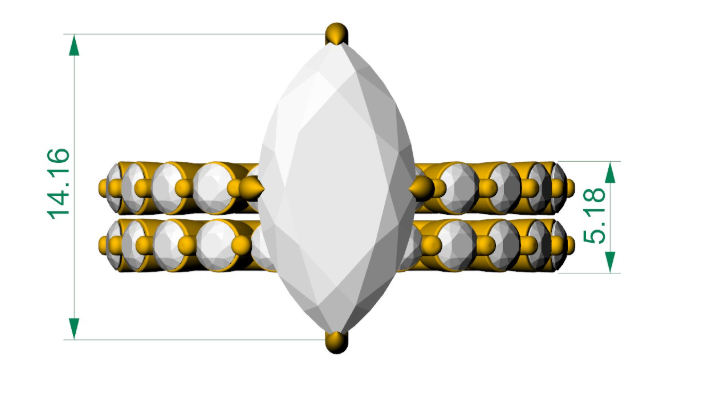
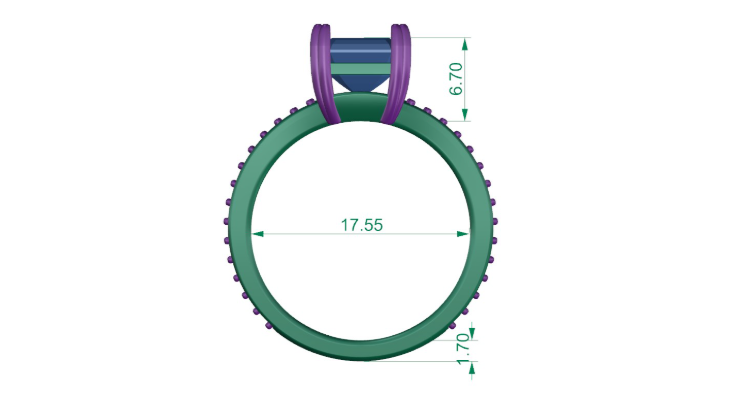
CAD software allows designers to create mathematically accurate jewelry models with exact measurements and dimensions. This is critical for gemstone fitting, ring sizing, structural durability, and manufacturing consistency.
A tiny measurement error can create major production issues later.
CAD minimizes those risks by allowing designers to test every detail digitally before manufacturing starts.
CAD improves:
- Gemstone alignment
- Ring sizing accuracy
- Structural balance
- Metal weight estimation
- Manufacturing consistency
Hand sketches may look beautiful artistically, but they cannot provide the technical precision required for production.
Creativity and Artistic Freedom
Hand sketching still offers a level of artistic freedom that many designers deeply value.
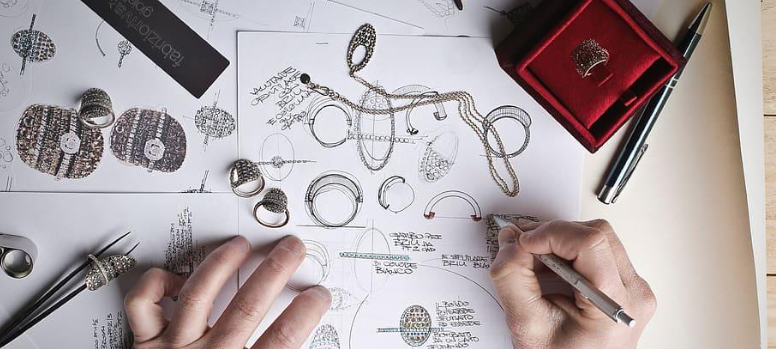
Sketching allows artists to experiment freely without worrying about software commands or technical restrictions. Designers can quickly explore shapes, decorative patterns, and unusual concepts in a very natural way.
Many jewelry artists feel more emotionally connected to their ideas when sketching by hand.
However, modern CAD software has become far more creative in recent years. Advanced sculpting tools like Blender and ZBrush now allow designers to build highly artistic and organic jewelry digitally.
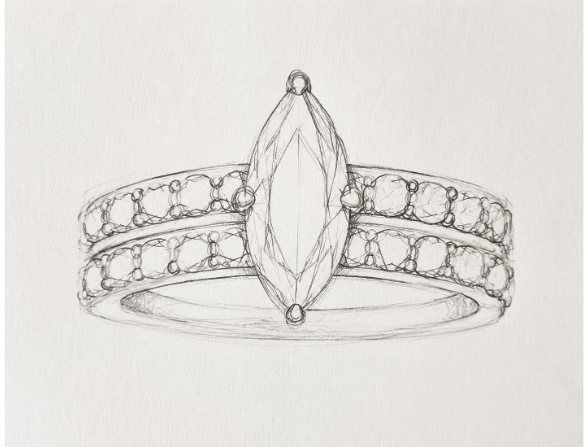
Today, most professional designers combine both methods:
- Sketch ideas by hand
- Refine designs using CAD
- Create renderings
- Prepare manufacturing-ready files
This hybrid workflow has become the modern industry standard.
Speed and Workflow Efficiency
During brainstorming, hand sketching is usually faster. Designers can draw multiple rough ideas within minutes.
But when revisions become necessary, CAD becomes significantly more efficient.
For example, customers may request:
- Larger gemstones
- Different metal types
- Modified band thickness
- Alternative settings
- Additional side stones
With CAD, these adjustments can be made quickly without redrawing the entire design.
This improves workflow efficiency and saves valuable time.
Client Visualization and Presentation
Modern jewelry customers expect realistic previews before purchasing custom pieces.
This is one area where CAD has completely transformed the customer experience.
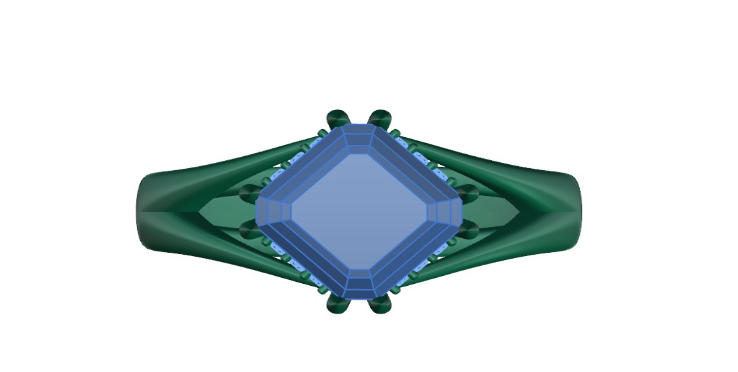
CAD software can generate photorealistic renderings showing:
- Diamond reflections
- Metal textures
- Surface polishing
- Lighting effects
- Multiple viewing angles
These visualizations improve customer trust and reduce approval delays.
Hand sketches still provide artistic charm, especially for luxury branding, but CAD offers much clearer visual communication.
Manufacturing and Production
CAD has revolutionized jewelry manufacturing because digital files can move directly into production systems.
Modern CAD models support:
- 3D printing
- CNC machining
- Wax model creation
- Resin prototyping
- Casting preparation
This speeds up production and reduces manufacturing errors.
Hand sketches alone cannot move directly into production. They usually need to be converted into CAD models first.
That’s why CAD has become essential for modern jewelry manufacturing.
External Resource:
https://www.gia.edu/
Why Choose The Cad Maker ? Is the Best Choice for Jewelry CAD Services?
Choosing the right Jewelry CAD partner can make a huge difference in the final quality of a jewelry piece. While many companies offer CAD modeling services, not all of them combine technical precision, creative understanding, and manufacturing expertise effectively.
In today’s competitive jewelry market, brands and designers need more than just a 3D model. They need a CAD partner that understands design aesthetics, production limitations, gemstone settings, customer expectations, and fast turnaround requirements all at the same time.
At The Cad Maker, help bridge that gap by delivering CAD solutions that are not only visually impressive but also fully optimized for real-world manufacturing.
Industry-Level Precision and Accuracy
One of the biggest reasons designers and jewelry businesses trust is precision.
Jewelry production leaves very little room for error. Even a tiny mistake in measurements can affect gemstone fitting, structural durability, or final finishing quality.
We carefully focused on:
- Stone dimensions
- Prong positioning
- Ring proportions
- Metal thickness
- Structural balance
This reduces manufacturing issues and improves overall production quality.
Advanced CAD Technology and Modern Workflow
At The Cad Maker, uses advanced CAD tools and modern workflows to create highly detailed, manufacturing-ready jewelry models.
Their CAD files integrate smoothly with:
- 3D printing
- Wax model production
- CNC machining
- Casting preparation
- Custom jewelry manufacturing
This allows jewelry brands to move from concept to production much faster.
Creative Designs With Manufacturing Intelligence
Some CAD providers focus only on visuals without understanding manufacturing limitations. Others focus too heavily on production and lose artistic creativity.
We balance both.
Their workflow combines artistic design with engineering precision, ensuring jewelry pieces are beautiful, wearable, and production-efficient at the same time.
This is especially important for:
- Custom engagement rings
- Luxury collections
- Complex gemstone settings
- High-detail designer jewelry
Faster Revisions and Better Client Collaboration
Customer revisions are common in custom jewelry design, and TCM simplifies the process through efficient CAD workflows.
If customers request:
- Larger center stones
- Different metals
- Alternative settings
- Modified band thickness
We can quickly update the design without restarting the entire project.
This improves customer experience and reduces production delays.
Compare Between Jewelry CAD v/s Sketch
Jewelry CAD | Hand Sketching |
Best for precision and manufacturing | Best for creativity and artistic exploration |
Ideal for production workflows | Ideal for brainstorming concepts |
Supports 3D printing and rendering | Supports emotional artistic expression |
Faster customer revisions | Faster idea generation |
Highly scalable for jewelry businesses | Preferred for luxury artistic presentations |
Frequently Asked Questions
Is Jewelry CAD better than hand sketching?
CAD is better for precision and manufacturing, while hand sketching is stronger for creativity and conceptual exploration.
Do jewelry designers still sketch by hand?
Yes. Many professional jewelry designers still use hand sketches during the early concept stage.
Why is CAD important in jewelry design?
CAD improves accuracy, customization, rendering quality, and manufacturing efficiency.
Can hand sketching replace CAD completely?
No. Modern jewelry production typically requires CAD files for manufacturing and 3D printing.
Final Thoughts
The debate between Jewelry CAD and hand sketching continues because both methods offer valuable strengths.
Hand sketching keeps the artistic side of jewelry design alive. It allows designers to explore ideas freely and communicate emotion through creativity.
CAD, meanwhile, delivers the precision, customization, and manufacturing efficiency required in today’s jewelry industry.
In 2026, the most successful jewelry designers are not choosing one method over the other. Instead, they combine both techniques to create jewelry that is artistic, accurate, and production-ready.
Sketching inspires creativity.
CAD transforms creativity into reality.
